Translation

Friday, 7 March 2014

A Negative Number Without the Negative Sign!

       What kind of negative number does not show -ve sign? And, why is it important for you to        recognise them when you see them - particularly in inequalities?         

        Now, you know that in an inequality, say, 
                                 2 < 3
         when you x or ÷ both sides of the inequality by a -ve number, say, by -1,

         it becomes:    -2 (sign) -3, and
         the inequality sign is the reverse of the earlier sign because:
      
                                -2 > -3
                          
                         This is basic O-Maths:
                          ---------
                          Thus, for SPM 2013 Modern Maths (1449/1) Paper 1 Q 24:
                          Q 24: Find the solution for (x - 6)/(-3) < 5

                          You can easily solve Q24 by multiplying both sides of the inequality by -3 
                          and, you reverse the inequality sign to finally get the answer x > -9 (Answer C)
                          ---------
                          
                          Now, in Add. Maths:
                          
                          You may come across inequality like this (in solving GP question):
                                              n log 0.25 > log 0.0005 
                                              for you to find the greatest integer value of n.
                                                  
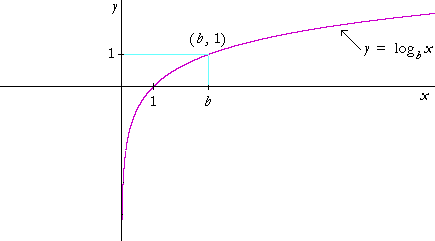
                              To solve this Q, you must know that: log (0 < x < 1) = negative numbers, although they                             do not carry the -ve signs with them. Let me explain:

         For y = logb x:   When 0 < x < 1, y = logb x = -ve number. (pl see here. or use calculator to verify)
         Thus, all Add-Maths students must know this:

                               log (0 < x < 1) = negative numbers 
                              (even though the -ve sign is not shown)
                                
           Thus, log 0.00001, log 0.25, log (1/5), log 0.99999 (and the likes, where 0 < x < 1)
           are all -ve numbers! 
                   
           So, in the inequality:  n log 0.25 > log 0.0005,
                            
            when you divide both sides of the inequality by log 0.25, to isolate and find n;
            you have to reverse the > sign since log 0.25 is a negative number (-0.602059991),
            Thus,        n < log 0.0005/log 0.25
                            n < 5.482892142
            Therefore, the greatest integer value of n = 5 
            
     (This skill is tested in Q9(f) of Edexcel 4PMO 2013 Jan Paper 2 on "Series" (pl see below). So, all A-Maths students - SPM and IGCSE Cambridge alike - beware! You may face a logarithmic inequality question of the above nature in time to come if you have not already been tested this way! By the way, there are also other negative numbers without the negative signs - can you name some of them? :)) 
------------------------------------------------------------------------------------

Edexcel PMO 2013 Jan Paper 2 Q9

9) The third and fifth terms of a geometric series S are 48 and 768 respectively. Find
(a) the two possible values of the common ratio of S,          (3)
(b) the first term of S.                                                         (1)

Given that the sum of the first 5 terms of S is 615
(c) find the sum of the first 9 terms of S.                            (4)

Another geometric series T has the same first term as S. The common ratio of T is 1
where r is one of the values obtained in part (a). The nth term of T is tn.
Given that t2 > t3
(d) find the common ratio of T.                                    (1)

The sum of the first n terms of T is Tn
(e) Writing down all the numbers on your calculator display, find T9.      (2)

The sum to infinity of T is T
Given that T – Tn > 0.002
(f) find the greatest value of n.                                   (5)

-----------------------------------------------------------------------------


Monday, 20 January 2014

Past-Year Questions on Cosine Formula/Rule, Sine Formula/Rule (including ambiguous case)...

Edexcel Past-Year Questions (involving Sine Formula, Cosine Formula, Etc.)

A) Given 2 sides and 1 angle of Δ:

1)        In ΔABC, AB = 7 cm, AC = 6 cm, angle ABC = 42o and angle ACB = Өo.
Find, to 1 decimal place, the 2 possible values of Ө.           (24/3/2004 P1 Q1)

2)        In ΔABC, AB = 5.7 cm, BC = 8.4 cm, angle ACB = 42o.
Find, to the nearest 0.1o, the 2 possible sizes of angle BAC.  (15/01/2010 P1 Q1)

3)    In triangle ABC, AB = 4.6 cm, AC = 5.7 cm and angle C = 52o. Angle B is acute.
Calculate, to the nearest 0.1o, the size of angle B.   (14/01/2011 P1 Q2)

4)    In ΔABC, BC = 12 cm, AC = 10 cm, angle ACB = 48o.
Find, to 3 significant figures,
(a)    the length of AB,
(b)   the size of angle BAC                                      (27/05/2004 P1 Q3)

5)        In ΔLMN, LM = 5.6 cm, LN = 8.2 cm, angle MLN = 57o.
Find, to 3 significant figures,
a)      the length of MN,
b)      the size of angle LMN                                      (17/05/2007 P2 Q3)
-----------------------------------------------------------------------------------


B) Given 2 angles and 1 side of Δ:

6)        In ΔABC, angle A = 45o and B = 60o and AB = 7 cm.
Calculate to 3 significant figures, the length of BC.   (26/05/2006 P2 Q1)
------------------------------------------------------------------------------------

C) Given 3 sides of Δ

7)        A triangle has sides of lengths 4.6 cm, 5.3 cm and 6.5 cm.
Find, to the nearest degree, the size of the largest angle of the triangle.
                                                                                         (23/01/2007 P2 Q1)

8)        Triangle LMN has LM = 5 cm, LN = 8.2 cm and MN = 6.4 cm
Calculate, in degrees to the nearest 0.1o, the size of angle LMN.
                                                                                         (21/01/2008 P1 Q1)

9)        The lengths of the sides of a triangle are 4 cm, 5 cm and 6 cm.
Find, in degrees to 1 decimal place, the size of the largest angle of the Δ.
                                                                                         (12/05/2008 P1 Q1)

10)    The lengths of the sides of a triangle are 5 cm, 6 cm and 8 cm.
(a)    Find, in degrees to 1 decimal place, the size of the smallest angle of the Δ.
(b)   Find, to the nearest cm2, the area of the Δ.                   (13/05/2010 P1 Q4)

11)    In ΔABC, AB = 5 cm, BC = 8.3 cm and AC = 6.9 cm
(            a)    Find, in degrees to the nearest 0.1o, the size of angle ACB.
(            b)   Find, in cm2, to 3 significant figures, the area of ΔABC.
(18/01/2010 P2 Q2)

---------------------------------------------------------------------------------------
Q12 to Q14 have to be scanned and shown below because the blogging software cannot produce the drawn triangles as they are - perhaps certain plug-in needed:


-------------------------------------END----------------------------------------
Monday, 6 January 2014

SPM (2005 - 2013) Past Year Questions on Trigonometric Function Graphs

SPM Past-Yr Questions on Trigonometric Function Graphs (Yrs: 2005 – 2013):
(with a peek at similar questions from IGCSE Cambridge Add-Maths 0606 and Edexcel 4PMO (Further Pure Maths)

(Note: SPM 2013 P2 Q4 on trigonometric functions does not involve graphs unlike the years before)

The SPM Past Year Questions:

1)        2012 P2 Q6:
(a)    Prove that 2/(cos 2x + 1) = sec2 x.                                          (2)
(b)   (i) Sketch the graph of y = cos 2x + 1 for 0 ≤ x ≤ 2π.               (3)
(ii) Hence, use the same axes, sketch a suitable straight line to find the number of solutions to the equation 2/sec2 x = x/4π + 1 for 0 ≤ x ≤ 2π.
State the number of solutions.                                          (3)

2)        2011 P2 Q6:
(a)   Sketch the graph of y = -3 sin (3/2)x for 0 ≤ x ≤ 2π.               (4)
(b)   Hence, using the same axes, sketch a suitable graph to find the number of solutions to the equation π/x + 3 sin (3/2)x = 0 for 0 ≤ x ≤ 2π.      
State the number of solutions.                                                 (3)

3)        2010 P2 Q2:
(a)    Sketch the graph of y = 1 + 3 cos x for 0 ≤ x ≤ 2π.                  (4)
(b)   Hence, using the same axes, sketch a suitable straight line to find the number of solutions to the equation 6π cos x = 4π – 3x for 0 ≤ x ≤ 2π.
State the number of solutions.                                                   (3)

4)        2009 P2 Q4:
(a)    Sketch the graph of y = (3/2) cos 2x for 0 ≤ x ≤ (3/2)π.            (3)
(b)   Hence, using the same axes, sketch a suitable straight line to find the number of solutions to the equation (4/3π)x – cos 2x = (3/2) for 0 ≤ x ≤ (3/2)π.
State the number of solutions.                                                   (3)

5)        2008 P2 Q4:
(            a)    Prove that (2 tan x)/(2 - sec2 x) = tan 2x.                                              (2)
(            b)   (i) Sketch the graph of y = - tan 2x for 0 ≤ x ≤ π.         
(ii) Hence, using the same axes, sketch a suitable straight line to find the number of solutions to the equation 3x/π + (2 tan x)/(2 - sec2 x) = 0
for 0 ≤ x ≤ π.
State the number of solutions.                                            (6)

6)        2007 P2 Q3:
(a)      Sketch the graph of y = ׀3 cos 2x׀ for 0 ≤ x ≤ 2π.                    (4)
(b)      Hence, using the same axes, sketch a suitable line to find the number of solutions to the equation 2 - ׀3 cos 2x׀ = x/2π for 0 ≤ x ≤ 2π.
State the number of solutions.                                                   (3)

7)        2006 P2 Q4:
(a)      Sketch the graph of y = -2 cos x for 0 ≤ x ≤ 2π.                        (4)
(b)      Hence, using the same axes, sketch a suitable graph to find the number of solutions to the equation π/x + 2 cos x = 0 for 0 ≤ x ≤ 2π.                   
State the number of solutions.                                                    (3)

8)        2005 P2 Q5:
(a)      Prove that cosec2 x – 2 sin2 x – cot2 x  = cos 2x.                      (2)
(c)      (i) Sketch the graph of y = cos 2x for 0 ≤ x ≤ 2π.       
(ii) Hence, using the same axes, draw a suitable straight line to find the number of solutions to the equation 3 (cosec2 x – 2 sin2 x – cot2 x) = (x/π) – 1 for 0 ≤ x ≤ 2π.

State the number of solutions.                                              (6)

----------------------END-------------------------

-------------------------------------------------------------------------------
Try this question of mine before you proceed further:

My QFor 0o ≤ x ≤ 180o, find to 3 significant figures the range of values of x for
           5 sin x > cos x.                     (Answer given at the end of this post)
                                   
---------------------------------------------------

Let's take a look at a Cambridge IGCSE question on trigonometric function graphs:


---------------------------------------------------------------------------------

Let's take a look at a Edexcel IGCSE Add-Maths (4PMO) question on trigonometric function graphs:


----------------------------------------------------------------------------------

(Ans to My Q: 11.3o < x ≤ 180- posed after the SPM Past-Yr Qs)

---------------------------------------------------------------------------------

Let's take a break and go jogging:


------------------------------------------------------

P/S: If You Need Help In Physics, Chemistry, Add-Maths and/or O-Maths (IGCSE Yr 10/11 or SPM or CIE AS/A2 Chemistry 9701)

Help is Available in or around Petaling Jaya, Selangor:
1) Just email tutortan1@gmail.com; or WhatsApp018-3722 482. Act early to avoid disappointment! Currently in May 2016, existing students are about to finish their Summer exams. Their slots are up for grab starting now! All slots are normally taken up by end-June. Act now to avoid disappointment!

2) Those far-away can follow my student-friendly blog(s) for free. :).

-----------------------------------------------------------


Friday, 27 December 2013

Answer to Addition Formulae Question 2

Edexcel Past-Year Question (Q10 P1, 28/5/2004)

2)                         sin(A + B) ≡ sin A cos B + cos A sin B

By expanding R sin(x + Ө),

(a)    Find, in degrees to 1 decimal place, the value of Ө such that

5 sin x + 12 cos x ≡ R sin(x + Ө)

Where R > 0, 0 < Ө < 90o and 0 < x < 360o.                                    (5)

(b)   Show that R = 13.                                                                                (2)
                                  
(c)    Write down the minimum value of 5 sin x + 12 cos x.                            (1)

(d)   Find, to 1 decimal place, the value of x which gives this minimum value. (2)

(e)    Solve the equation 5 sin x + 12 cos x = 8.                                            (4)


My Proposed Solutions

2 (a)     Expanding,       R sin(x + Ө) = R [sin x cos Ө + cos x sin Ө]
                                                         = R sin x cos Ө + R cos x sin Ө
                                                         ≡ 5 sin x + 12 cos x
            Comparing coefficients:   R cos Ө = 5                         …Eqn (1)
                                                  R sin Ө = 12                        …Eqn (2)
            (2) ÷ (1):                       (R sin Ө)/( R cos Ө) = tan Ө = 12/5
                                                  tan Ө = 2.4
            For domain 0 < Ө < 90oӨ = tan-1 2.4 = 67.38…o
       
            Answer: Ө = 67.4o (1 d.p.)      

2 (b)     Using eqn (1):    R = 5/cos Ө = 5/cos (tan-1 2.4) = 13 (Shown)

2 (c)     Since,               5 sin x + 12 cos x ≡ R sin(x + Ө)
            Implying:           Min. value occurs when R sin(x + Ө) is minimum, and
R sin(x + Ө) is minimum when sin(x + Ө) = - 1
            Therefore:         Min. value of 5 sin x + 12 cos x ≡ 13(-1) = - 13 (Answer)

2 (d)     To find x which gives the minimum value:
            Use:                             R sin(x + Ө) = - 13, where R = 13 and Ө = tan-1 2.4
                                                sin(x +  Ө) = - 1
            Domain for (x + Ө):      0 + 67.38…o < (x + Ө) < 360o + 67.38…o
            Therefore:                     (x + Ө) = sin-1(-1) = 270o
            Hence,                         x = 270o – Ө = 270o -  tan-1 2.4 = 202.61…o

            Answer: x = 202.6o (1 d.p.)
                       
2 (e)     To solve:                      5 sin x + 12 cos x = 8
            Use:                             R sin(x + Ө) = 8, where R = 13 and Ө = tan-1 2.4
            Therefore:                     sin(x + Ө) = 8/13
            Domain for (x + Ө):      0 + 67.38…o < (x + Ө) < 360o + 67.38…o
            Reference Angle, R:      R = sin-1 (8/13) = 37.97…o (< 67.38…o)
            Therefore,                    (x + Ө) = 180o - R (2nd Qd), or, = 360o + R (5th Qd)
            Hence,                         x = 180o – R – Ө         or, = 360o + R - Ө
Thus,                            x = 180o - sin-1 (8/13) - tan-1 2.4 = 74.63…o
                                         or,  x = 360o + sin-1 (8/13) - tan-1 2.4 = 330.59…o
           

Answer: x = 74.6o or 330.6o (1 d.p.)


Thursday, 26 December 2013

TRIGONOMETRY PAST YEAR QUESTIONS ON ADDITION FORMULAE

Trigonometry – Addition Formulae:

Edexcel syllabus on this segment reads:
“The use of the basic addition formulae of trigonometry. Formal proofs of the basic formulae will not be required; questions using the formulae for sin(A + B), cos(A + B), tan(A + B) may be set; the formulae will be provided, for example:
            sin(A + B) = sin A cos B + cos A sin B
Long questions, explicitly involving excessive manipulation, will not be set.”

-----------------------------------------------------------------------------------------------------

Edexcel Past Year Questions Involving Addition Formulae:

[(27.12.2013): Try the questions first. Then only look for my proposed solutions either in the link given under the question or upon your email request. It's time consuming to get them all typed and posted. Nevertheless, I blog herewith the solution for Q1 to show you that these are all very interesting questions. Have fun and try them all!]

1)                         sin (A + B) ≡ sin A cos B + cos A sin B

            sin (A - B) ≡ sin A cos B – cos A sin B

(a)    Show that sin (A + B) + sin (A - B) ≡ 2 sin A cos B.                         (1)

(b)   Hence show that sin P + sin Q ≡ 2 sin [(P+Q)/2] cos [(P-Q)/2].           (3)

(c)    Solve for x, 0 ≤ x ≤ π/2, giving your answers in terms of  π,
the equation sin 5x + sin 3x = 0.                                                         (5)

(d)   Show that sin 6x + 2 sin 4x + sin 2x ≡ 4 sin 4x cos2x.                        (4)

(e)    Hence…(Form 5 ‘Integration’)                        (24/3/2004 P1 Q11)

My Proposed Solution:

1(a) LHS = sin (A + B) + sin (A - B)
               = (sin A cos B + cos A sin B) + (sin A cos B – cos A sin B)
               = 2 sin A cos B
               = RHS (Shown)

1(b) Let:              P = A + B;   and   Q = A - B
       Therefore: P + Q = 2A; implying:   A = (P+Q)/2
                         P - Q = 2B; implying:    B = (P-Q)/2
        Since:        sin (A + B) + sin (A - B) ≡ 2 sin A cos B (see 1(a))
        Imply:  LHS =  sin P + sin Q ≡ 2 sin A cos B = 2 sin [(P+Q)/2] cos [(P-Q)/2]
                            = RHS (Shown)

1(c)                                 sin 5x + sin 3x = 0 
       Use 1(b): Therefore, 2 sin [(5x+3x)/2] cos [(5x-3x)/2] = 0
                                       2 sin 4x cos x = 0
                      Imply: cos x = 0    or, sin 4x = 0   for  0 ≤ 4x ≤ 2π
                                      x = π/2  or,   4x = 0, π  or 2π
                                                   or,    x = 0, π/4 or π/2 

1(d) LHS = sin 6x + 2 sin 4x + sin 2x    
               =  (sin 6x + sin 2x) + 2 sin 4x  (since RHS also has term: sin 4x) 
               = 2 sin [(6x+2x)/2] cos [(6x-2x)/2] + 2 sin 4x
               = 2 sin 4x cos 2x + 2 sin 4x
               = 2 sin 4x (cos 2x + 1)
       From here, if you remember or are given the identity: cos 2x ≡ 2 cos2 x – 1 
        LHS = 2 sin 4x [(2 cos2 x – 1) + 1] 
                = 2 sin 4x (2 cos2 x)
                = 4 sin 4x cos2
                = RHS (Shown)
                                        
       Alternatively, use these relationships (if cos 2x ≡ 2 cos2 x – 1 is not given)
       * cos 2x = sin (π/2 - 2x) ....Sine and cosine of complimentary angles are equal;
       * 1 = sin π/2 ...............Trigo ratio of convenient angle: sin π/2 = sin 90= 1
     
        Thus, LHS 2 sin 4x (cos 2x + 1)
                          = (2 sin 4x) [sin (π/2 - 2x) + sin π/2] 
                         = (2 sin 4x){2 sin [(π/2 - 2x π/2)/2] cos [(-2x)/2]}
                         = (4 sin 4x) sin (π/2 - x) cos (-x)
                         = (4 sin 4x) cos x cos x ..........[sin (π/2 - x) = cos x]
                         =  4 sin 4x cos2
                         = RHS (Shown)

----------------------------------------------

If you ponder over Q1 above and its solutions, you should also be able to solve this:

Extra Q. Find the exact value of: sin 75o + sin 15o.     (Answer: √(3/2))

P/s: If you don't know, email me and kindly introduce yourself when requesting something.
                   
--------------------------------------------------------------------------------------------------

2)                         sin(A + B) ≡ sin A cos B + cos A sin B

By expanding R sin(x + Ө),

(a)    Find, in degrees to 1 decimal place, the value of Ө such that

5 sin x + 12 cos x ≡ R sin(x + Ө)

where R > 0, 0 < Ө < 90o and 0 < x < 360o.                                        (5)

(b)   Show that R = 13.                                                                                  (2)
                                  
(c)    Write down the minimum value of 5 sin x + 12 cos x.                              (1)

(d)   Find, to 1 decimal place, the value of x which gives this minimum value    (2)

(e)    Solve the equation 5 sin x + 12 cos x = 8.                                              (4)

Click here for Q2 answer.                                                  (28/5/2004 P1 Q10)


------------------------------------------------------------------------------------------------------


3)                         cos(A + B) ≡ cos A cos B – sin A sin B

(a)      Show that cos 2A ≡ 2 cos2 A – 1.                                             (3)

(b)      Show that cos 4Ө ≡ 8 cos4 Ө – 8 cos2 Ө + 1.                           (3)

Hence
(c)      solve, in radians to 3 significant figures, 10 cos4 Ө – 10 cos2 Ө + 1 = 0,
for 0 < Ө <  π/2,                                                                         (6)

(d)      find…(Form 5: Integration)                                                         (5)

(28/1/2005 P2 Q10)
-----------------------------------------------------------------------------------------------------

4)                         sin(A + B) ≡ sin A cos B + cos A sin B

cos(A + B) ≡ cos A cos B – sin A sin B

(a)    Obtain an expression for cos 2Ө in terms of sin2 Ө.                       (2)

(b)   Obtain an expression for sin 2Ө in terms of sin Ө and cos Ө.         (1)

(c)    Show that cos 4Ө ≡ 1 – 8 sin2 Ө + 8 sin4 Ө.                                (4)

(d)   Solve, for 0 ≤ Ө ≤  π/2, the equation sin2 Ө - sin4 Ө = 0.1, giving your solutions to 2 decimal places.                                                                                          (4)

(e)    Find…(Form 5: Integration)                                                          (5)

(27/5/2005 P2 Q10)
------------------------------------------------------------------------------------------------------

5)                                         sin (A + B) ≡ sin A cos B + cos A sin B

cos (A + B) ≡ cos A cos B – sin A sin B

(f)     Obtain an expression for cos 2Ө in terms of cos2 Ө.                      (2)

(g)    Obtain an expression for sin 2Ө in terms of sin Ө and cos Ө.         (1)

(h)    Show that cos 3Ө ≡ 4 cos3 Ө - 3 cos Ө.                                      (4)

(i)      Solve, for 0 ≤ Ө ≤ π/2, the equation 9 cos Ө – 12 cos3 Ө = 2, giving your answers to 3 significant figures.                                                                                         (4)

(j)     Find…(Form 5: Integration)                             (21/1/2008 P1 Q9)

--------------------------------------------------------------------------------------------------------


6)        Using cos(A + B) ≡ cos A cos B – sin A sin B,

(a)    show that

(i)             sin2 Ө = (1/2)(1 – cos 2Ө),

(ii)           cos2 Ө = (1/2)(cos 2Ө + 1)                                                      (4)


f(Ө) = 1 + 10 sin2 Ө - 16 sin4 Ө .

(b)   Show that f(Ө) = 3 cos 2Ө – 2 cos 4Ө.                                               (4)

(c)    Solve the equation

1 + 10 sin2 Өo - 16 sin4 Өo + 2 cos 4Өo = 0.25, for 0 ≤ Ө ≤ 180

giving your solutions to 1 decimal place.                                              (4)

(d)   …(Form 5 ‘Integration’)                                                                      (5)

(24/5/2006 P1 Q10)

------------------------------------------------------------------------------------------------------


7)                                cos(A + B) ≡ cos A cos B – sin A sin B,

f(Ө) = 5 cos Ө - 12 sin Ө

Given that f(Ө) = p cos (Ө + α), p > 0, 0 < α < π/2

(a)    (i)  show that p = 13

(ii) find, in radians to 3 significant figures, the  value of α                       (5)

(b)   Hence solve, to 2 significant figures, for 0 ≤ Ө ≤ 2π, 5 cos Ө - 12 sin Ө = 9
(4)

(c) …(Integration …Form 5)                                                                     (5)

                                                                                         (19/1/2007 P1 Q8)

------------------------------------------------------------------------------------------------------


8)                                         cos(A + B) ≡ cos A cos B – sin A sin B

sin(A + B) ≡ sin A cos B + cos A sin B

(a)   Write down an expression for sin 2Ө in terms of sin Ө and cos Ө .
(1)

Show that:

(b)   sin2 Ө ≡ (1/2)(1 – cos 2Ө),                                                                 (2)

(c)    sin2 (A + B) - sin2 (A - B) ≡ sin 2A sin 2B.                                         (5)


Hence,
(d)   Show that        (i) sin2 3Ө - sin2 Ө ≡ sin 4Ө sin 2Ө
(ii) sin2 3Ө - sin2 Ө ≡ (1/2)(cos 2Ө – cos 6Ө).            (4)

(e)    Find…(Form 5: Integration)                                                               (5)

(17/5/2007 P2 Q10)

-------------------------------------------------------------------------------------------------------

9)        Using the identities
         
cos(A + B) ≡ cos A cos B – sin A sin B

sin(A + B) ≡ sin A cos B + cos A sin B

express

(a)   cos 2A in terms of cos A.                                                                 (2)

(b)   sin 2A in terms of sin A and cos A, simplifying your answer.              (1)

(c)   Hence show that cos 3A ≡ 4 cos3 A – 3 cos A .                               (4)

(d)   Solve, for 0 ≤ x ≤ 180o, the equation 4 cos3 A – 3 cos A = 0.6, giving your solutions to one decimal place.                                                                                   (5)

(e)      (Form 5: Integration)                                                                         (5)

(12/5/2008 P1 Q9)

---------------------------------------------------------------------------------------------------------

10)     cos (A + B) ≡ cos A cos B – sin A sin B

Show that

(a)    cos (A + B) + cos (A – B) ≡ 2 cos A cos B,                                      (1)

(b)   cos 2A ≡ 2 cos2 A – 1                                                                       (2)

(c)    cos P + cos Q ≡ 2 cos [(P+Q)/2] cos [(P-Q)/2]                                   (2)

(d)   Hence show that cos 8x + 2 cos 6x + cos 4x ≡ 4cos 6x cos2 x           (4)

(e)    (Form 5: Integration)…                                                                      (6)

(17/5/2010 P2 Q9)

-------------------------------------------------------------------------------------------------------

11)                                     sin (A + B) ≡ sin A cos B + cos A sin B

cos (A + B) ≡ cos A cos B – sin A sin B

(a)    By writing tan (A + B) ≡ sin (A + B) / cos (A + B),

prove that tan (A + B) ≡ (tan A + tan B)/(1 – tan A tan B)                 (3)

(b)   Hence or otherwise, find the exact value of

(i)                  tan 75o,
(ii)                tan 15o,
simplifying your answers as far as possible.                                       (5)

(c)    Use the result in (a) to write down an expression for tan 2Ө in terms of tan Ө.
                                                                                                               (1)

(d)   Hence find the exact value of tan 22.5o.                                             (4)


Given that tan Ө = 2/5 and Ө is an acute angle,

(e)    Find the exact value of sin 2Ө.                                                         (4)

(18/1/2010 P2 Q10)

-------------------------------------------------------------------------------------------------------


12)                     cos(A + B) ≡ cos A cos B – sin A sin B

cos(A - B) ≡ cos A cos B + sin A sin B

(a)    Prove that cos 2A ≡ 2cos2 A – 1                                             (2)


f(Ө) = cos 5Ө + cos 3Ө + 2cos Ө

(b)   Show that

(i)                  cos 5Ө + cos 3Ө ≡ 2cos 4Ө cos Ө,

(ii)                f(Ө) = 16cos5 Ө – 16cos3 Ө + 4cos Ө.                       (6)

(c)    Hence or otherwise solve, for –π ≤ Ө ≤ π, giving the value of Ө in terms of π,
      the equation cos 5Ө + cos 3Ө - 2cos Ө = 0.                           (5)

(d)    (Form 5: Intergration)…                                                         (5)

(14/5/2009 P2 Q10)

-------------------------------------------------------------------------------------------------------

13)                           sin (A + B) ≡ sin A cos B + cos A sin B

tan A ≡ sin A/cos A

(a)    Show that the equation

2 sin(x + α) = 5 sin(x – α)

Can be written in the form

                      3 tan x = 7 tan α                                               (5)

(b)   Hence solve, to one decimal place,                                           (5)

2 sin (2y + 50o) = 5 sin(2y -50o) for 0 ≤ y ≤ 180o

                                                (17/01/2011 P2 Q7)
-------------------------------------------------------------------------------------------------------

14)                                         cos(A + B) ≡ cos A cos B – sin A sin B,

(a)    Show that

(i)             sin2 Ө = (1 – cos 2Ө),

(ii)           cos2 Ө = (cos 2Ө + 1)                                                            (3)


             f(Ө) = 8 sin4 Ө + 4 sin2 Ө - 5.

(b)   Show that f(Ө) = cos 4Ө - 6 cos 2Ө.                                                  (4)

(c)    Solve, for 0 ≤ Ө ≤ π/2, the equation

4 sin4 Ө + 2 sin2 Ө + 3 cos 2Ө = 2.4

       Give your solutions to 3 significant figures                                            (4)

(d)   …(Form 5 ‘Integration’)                                                                      (5)
                                                                                                      (14/1/2011 P1 Q8)

---------------------------------END---------------------------------------------------